Introduction to Nasya (Nasal Therapy)
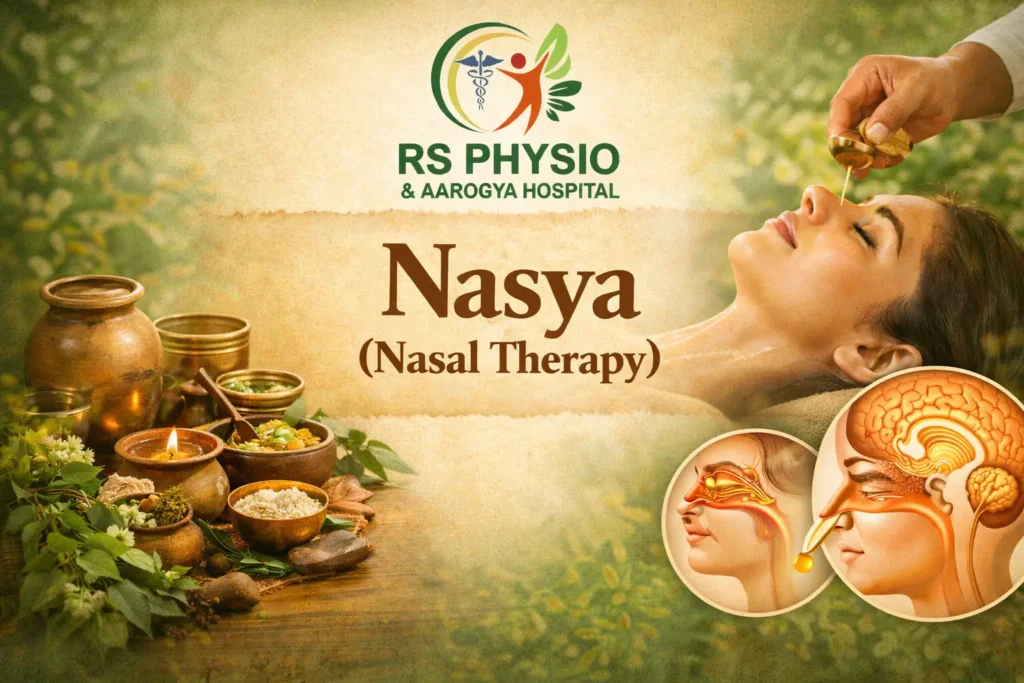
Nasya (Nasal Therapy) is a classical Ayurvedic treatment designed to cleanse, nourish, and strengthen the organs of the head and neck. Ayurveda considers the nose as the direct gateway to the brain and nervous system, which is why nasal therapies are given special importance in Panchakarma. When doshas accumulate in the head region, they often lead to sinus problems, headaches, neck stiffness, allergies, and mental fatigue.
At RS Physio & Aarogya Hospital Jhajjar, Nasya is performed according to authentic Ayurvedic guidelines after proper assessment of body constitution and disease condition. This therapy is gentle, non-invasive, and highly effective when done correctly.
What Is Nasya (Nasal Therapy) in Ayurveda?
Nasya is a therapeutic procedure in which medicated substances such as herbal oils, ghee, juices, or powders are administered through the nostrils. Ayurveda explains that disorders above the collarbone—affecting the brain, sinuses, eyes, ears, throat, and hair—respond best to nasal administration of medicine.
Unlike modern nasal drops that provide only temporary relief, Nasya (Nasal Therapy) works at a deeper level by removing accumulated doshas and nourishing delicate tissues. It is used both as a curative and preventive therapy.
Ayurvedic Principle Behind Nasya (Nasal Therapy)
Ayurvedic texts describe the head as the control center of the body. Any imbalance in this region can disturb sleep, memory, breathing, sensory perception, and emotional balance. Nasya works on the principle of:
- Eliminating excess Kapha and Vata from the head
- Improving circulation to the brain
- Clearing blocked channels (Srotas)
- Strengthening sensory and nervous tissues
Because medicines are absorbed directly through the nasal mucosa, the effect is fast and long-lasting.
How Nasya (Nasal Therapy) Works Inside the Body
When medicated oil or herbal extract is introduced into the nostrils, it reaches the vital junction known as Shringataka Marma. This point is connected to the brain, sinuses, eyes, ears, and throat. From here, the medicine spreads through subtle channels.
The therapy helps to:
- Liquefy and expel accumulated mucus
- Reduce inflammation in sinus cavities
- Improve oxygen supply to brain tissues
- Calm the nervous system
Over time, this leads to better clarity, improved breathing, and reduced recurrence of ENT problems.
Types of Nasya (Nasal Therapy)
Ayurveda describes different types of Nasya based on the nature of medicine used and the therapeutic goal. Each type has a specific role and is selected according to the patient’s condition.
1. Virechana Nasya (Nasal Therapy) (Cleansing Nasya)
This type uses stronger herbal preparations such as fresh plant juices or powders to expel aggravated Kapha dosha from the head.
Commonly advised for:
- Chronic sinusitis
- Severe nasal congestion
- Migraine associated with heaviness in the head
It is usually done for a limited duration under strict supervision.
2. Snehana Nasya (Oil-Based Nasya)
Snehana Nasya (Nasal Therapy) uses medicated oils or ghee to lubricate and nourish tissues.
Benefits include:
- Relief from dryness in nose and throat
- Strengthening of nerves
- Prevention of degeneration
This type is especially useful in Vata-dominant conditions.
3. Shamana Nasya
Shamana Nasya is a mild form aimed at pacifying doshas rather than expelling them.
Helpful in:
- Allergic rhinitis
- Mild headaches
- Seasonal nasal irritation
It is often used when symptoms are moderate and ongoing maintenance is needed.
4. Brimhana Nasya (Nourishing Nasya)
This nourishing form is designed to strengthen brain tissues and sense organs.
Recommended for:
- Memory weakness
- Mental fatigue
- Anxiety and stress-related disorders
Herbal ghee or enriched oils are commonly used.
5. Pratimarsha Nasya
Pratimarsha Nasya is a daily preventive method where only a few drops of oil are used.
Best suited for:
- Daily routine care
- Children and elderly
- Long-term prevention of ENT disorders
This can be safely practiced over long periods.
Conditions Treated with Nasya Therapy
Nasya is particularly effective for disorders related to the upper part of the body. Common conditions include:
- Sinusitis
- Allergic rhinitis
- Migraine and chronic headaches
- Cervical stiffness and spondylosis
- Facial paralysis (supportive therapy)
- Insomnia and disturbed sleep
- Stress-related mental fatigue
- Hair fall and premature greying
When combined with proper diet and lifestyle correction, results are more stable.
Step-by-Step Procedure of Nasya
1. Purva Karma (Pre-Procedure)
Before administering Nasya:
- Gentle oil massage is done on face, neck, and shoulders
- Mild steam therapy opens nasal passages
- Patient is advised to relax
This preparation ensures better absorption of medicine.
2. Pradhana Karma (Main Procedure)
- Patient lies comfortably with head slightly tilted back
- Prescribed drops are instilled into each nostril
- Gentle massage helps spread the medicine
Proper breathing instructions are given during the process.
3. Paschat Karma (Post-Procedure)
- Patient expels loosened mucus
- Gargling with warm water is advised
- Light, warm food is recommended
These steps prevent discomfort and enhance benefits.
Benefits of Nasya (Nasal Therapy)
With proper guidance, this therapy provides multiple benefits such as:
- Clear nasal passages and improved breathing
- Reduction in headache frequency
- Better sleep quality
- Improved concentration and mental clarity
- Reduced stiffness in neck and shoulders
- Strengthening of hair roots
It is also useful as a preventive therapy for people prone to recurrent sinus issues.
Who Should Consider Nasya Therapy?
Nasya is beneficial for:
- People with frequent sinus or cold issues
- Those suffering from migraine or tension headaches
- Individuals exposed to pollution and dust
- People under constant mental stress
It is especially useful for people with Kapha or Vata imbalance affecting the head region.
When Should Nasya Be Avoided?
Nasya should not be performed:
- During acute fever
- Immediately after heavy meals
- During pregnancy without medical advice
- In severe nasal infections
Proper consultation is essential before starting therapy.
Role of Diet and Lifestyle After Nasya
For best results:
- Avoid cold and heavy foods
- Prefer warm, freshly cooked meals
- Protect head and neck from cold wind
- Maintain regular sleep routine
These practices help maintain the therapeutic effects for a longer time.
Why Choose RS Physio & Aarogya Hospital Jhajjar?
At RS Physio & Aarogya Hospital Jhajjar, Nasya therapy is planned with:
- Authentic Ayurvedic medicines
- Individualized treatment approach
- Hygienic clinical environment
- Integrated Ayurvedic and physiotherapy care
This ensures safe application and better long-term outcomes for patients seeking holistic treatment.
SEO-Friendly FAQs
What is Nasya therapy used for?
It is used for sinus disorders, headaches, neck stiffness, and stress-related conditions.
Is Nasya therapy painful?
No, it is a gentle and comfortable procedure.
How many sessions are required?
The number of sessions depends on the condition and its severity.
Can Nasya help chronic sinusitis?
Yes, it is highly effective when done correctly and regularly.
Is Nasya safe for daily use?
Pratimarsha Nasya can be safely used daily under guidance.