Introduction to Raktamokshana (Blood Purification)
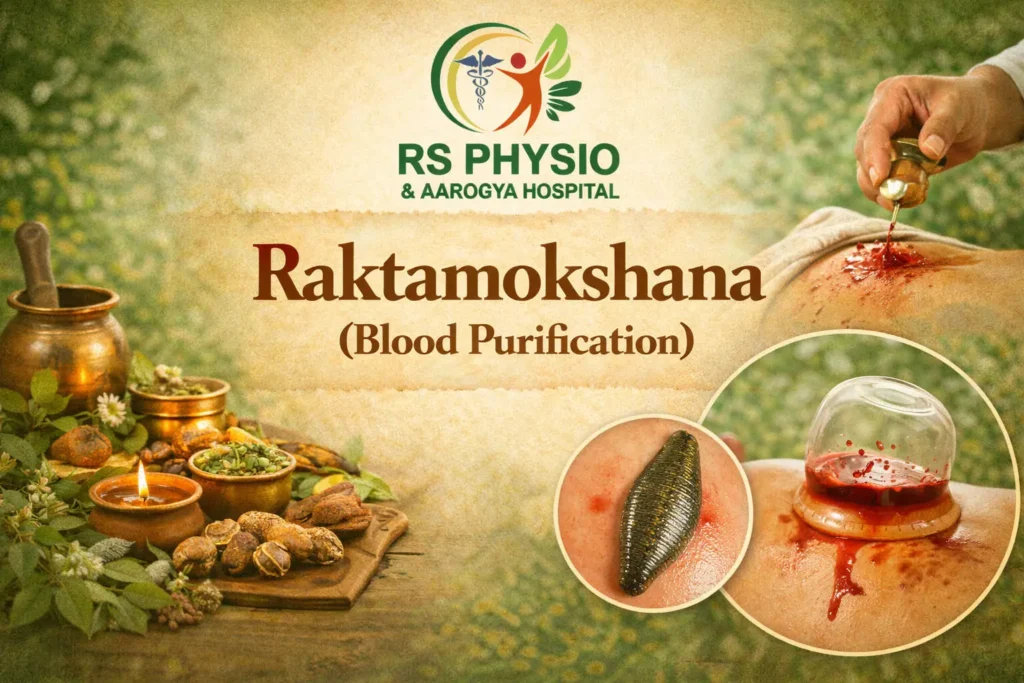
Raktamokshana (Blood Purification) is one of the specialized Panchakarma therapies described in classical Ayurveda for removing impurities from the blood and treating diseases caused by vitiated Rakta Dhatu. According to Ayurveda, impure blood is a root cause of many chronic conditions, especially skin disorders, inflammation, and localized pain.
At RS Physio & Aarogya Hospital Jhajjar, this therapy is performed following authentic Ayurvedic texts with proper assessment and strict safety protocols. Raktamokshana (Blood Purification) helps restore balance in the body by eliminating stagnant or contaminated blood and supporting natural healing.
What Is Raktamokshana (Blood Purification)?
Raktamokshana (Blood Purification) is an Ayurvedic therapeutic bloodletting procedure in which a small amount of impure blood is removed from the body using specific techniques. The aim is not blood loss, but detoxification and correction of underlying dosha imbalance, especially Pitta and Rakta.
Ayurveda considers Rakta (blood) as a vital tissue responsible for:
- Nourishing the body
- Maintaining skin health
- Supporting immunity
- Regulating body heat
When Rakta becomes vitiated, Raktamokshana (Blood Purification) becomes an effective natural intervention.
Importance of Raktamokshana in Ayurveda
In classical texts, Raktamokshana (Blood Purification) is sometimes given equal importance to Panchakarma therapies due to its powerful impact on chronic diseases. It is especially recommended when medicines alone are not sufficient.
Key Ayurvedic principles behind this therapy include:
- Removal of vitiated Rakta
- Reduction of excess Pitta
- Clearing of blocked channels (Srotas)
- Immediate relief in inflammatory conditions
How Raktamokshana (Blood Purification) Works
Raktamokshana (Blood Purification) works by removing toxic blood from localized or systemic circulation. This improves fresh blood formation and enhances oxygen and nutrient supply to tissues.
The therapy helps in:
- Reducing heat and inflammation
- Detoxifying blood tissues
- Improving skin clarity
- Supporting immune balance
Types of Raktamokshana (Blood Purification)
Ayurveda describes different types of Raktamokshana (Blood Purification) based on disease condition, body strength, and location of the disorder.
1. Siravedha (Venesection)
Siravedha is a method where blood is released from specific veins.
Used for:
- Severe skin diseases
- Abscess and inflammation
- Chronic pain conditions
2. Jalauka Avacharana (Leech Therapy)
This is the most commonly used and safest form of Raktamokshana (Blood Purification) today.
Benefits:
- Gentle and controlled blood removal
- Natural anticoagulant effect
- Ideal for sensitive patients
Recommended for:
- Psoriasis and eczema
- Varicose veins
- Non-healing ulcers
3. Prachchana (Scarification)
In this method, small superficial incisions are made to release impure blood.
Helpful in:
- Localized skin diseases
- Pigmentation disorders
- Chronic itching
4. Alabu Avacharana (Cupping Method)
This method uses vacuum pressure to draw out impure blood.
Used in:
- Deep-seated toxins
- Muscular inflammation
- Joint stiffness
Diseases Treated with Raktamokshana
Raktamokshana (Blood Purification) is highly effective in managing:
- Psoriasis
- Eczema
- Acne and boils
- Chronic itching
- Gout
- Varicose veins
- Non-healing wounds
- Inflammatory joint disorders
Step-by-Step Procedure of Raktamokshana
1. Purva Karma (Preparation)
- Clinical examination
- Identification of affected area
- Local oil massage or fomentation
2. Pradhana Karma (Main Procedure)
- Selection of appropriate method
- Controlled blood removal
- Strict hygiene and monitoring
3. Paschat Karma (Post Care)
- Wound care and dressing
- Light diet recommendations
- Lifestyle and dietary guidance
Benefits
Properly performed therapy provides:
- Clear and healthy skin
- Reduced inflammation and pain
- Faster wound healing
- Improved circulation
- Balanced Pitta dosha
- Long-term disease control
Who Should Undergo Raktamokshana
This therapy is recommended for individuals suffering from:
- Chronic skin diseases
- Recurrent boils or abscesses
- Burning sensation in body
- Localized inflammation
Who Should Avoid Raktamokshana (Blood Purification)?
This therapy should be avoided in:
- Severe anemia
- Pregnancy
- Extreme weakness
- Bleeding disorders
Proper evaluation is essential before starting Raktamokshana (Blood Purification).
Why Choose RS Physio & Aarogya Hospital Jhajjar?
At RS Physio & Aarogya Hospital Jhajjar, Raktamokshana therapy is carried out with:
- Classical Ayurvedic methods
- Medical-grade hygiene standards
- Individualized treatment planning
- Expert clinical supervision
This ensures both safety and therapeutic effectiveness for every patient.
FAQs
What is Raktamokshana (Blood Purification)?
It is an Ayurvedic blood detoxification therapy used to remove impure blood and treat chronic disorders.
Is Raktamokshana painful?
Leech therapy is gentle and mostly painless.
How many sessions are required?
It depends on disease severity and individual condition.
Is Raktamokshana safe?
Yes, when performed under proper Ayurvedic supervision.
Can it cure skin diseases permanently?
It helps in long-term control and reduces recurrence when combined with lifestyle changes.